
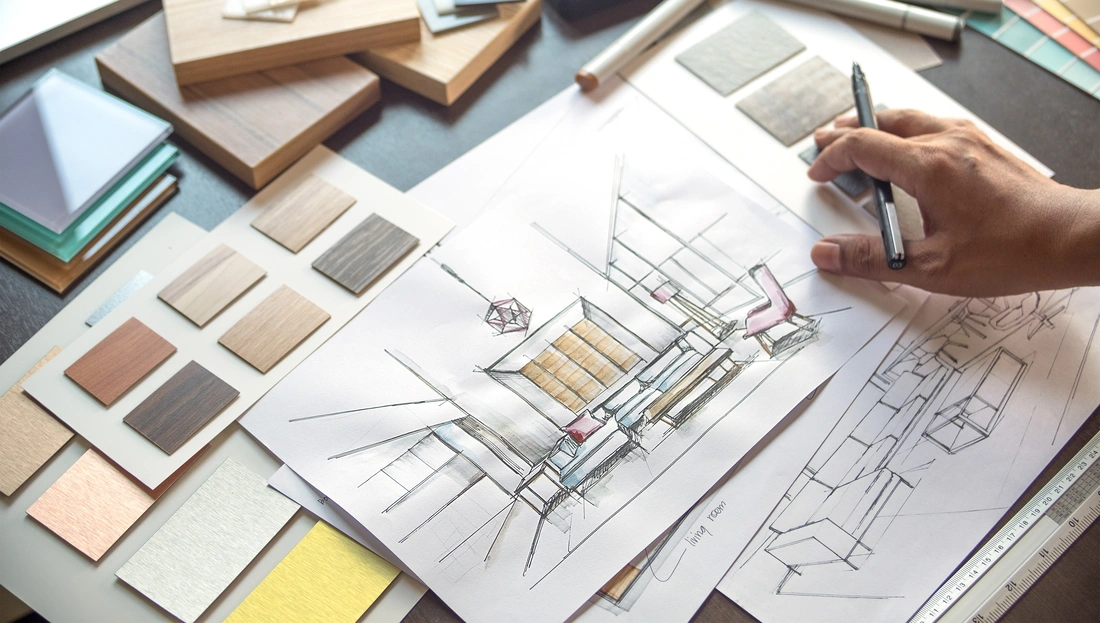
How to Choose an Interior Designer in Las Vegas and Henderson
Choosing an interior designer for a custom home involves more than finding a style you like. Learn how to evaluate experience, compare services and fees, understand Nevada credentials, and select a professional who can coordinate your interiors with the design and construction of your home.
Choose an Interior Designer Who Understands the Entire Home
To choose an interior designer in Las Vegas or Henderson, start with relevant residential experience, a compatible design approach, clearly defined services, and transparent pricing. For a custom home, also evaluate how the designer prepares construction selections, coordinates with your architect and builder, manages purchasing, and keeps decisions aligned with the project schedule. A finished room can demonstrate taste, proportion, and attention to detail, but photographs reveal only part of the work. They do not show whether specifications were complete, purchases stayed within budget, installation problems were resolved promptly, or the homeowner felt heard throughout the process. The right interior designer should help connect the way you want your home to look with the way you need it to function. That means understanding your daily routines, comfort preferences, storage needs, maintenance expectations, and investment before recommending finishes or furnishings.
Interior Designer vs. Interior Decorator: What Is the Difference?
An interior decorator generally focuses on the appearance and furnishing of an existing space, while an interior designer may provide broader space planning, interior detailing, specifications, and coordination with the construction team. Services overlap, so compare the actual scope and qualifications rather than relying on the business title alone. For a completed room that needs furniture, rugs, artwork, and a cohesive color palette, a decorator may provide exactly the right service. For a new custom home involving cabinetry, lighting coordination, finish transitions, and construction documentation, look for appropriate technical capabilities and clearly assigned professional responsibilities.
| Professional or Service | Typical Focus | What Homeowners Should Verify |
|---|---|---|
| Interior Decorator | Furniture, color, textiles, accessories, and styling. | Design compatibility, purchasing terms, installation services, and project experience. |
| Interior Designer | May include decorating, space planning, interior details, specifications, and construction coordination. | Exact services, training, relevant experience, and authorization for the proposed work. |
| Nevada Registered Interior Designer | A regulated credential associated with an authorized scope of interior-design practice. | Current state registration and the individual responsible for the work. |
| Nevada Residential Designer | A separate regulated profession concerned with residential building design. | Whether the credential and services match the building-design work required. |
| Retail Design Service | Product selection and layouts associated with a retailer’s offerings. | Product limitations, compensation, measurement responsibilities, and services beyond purchasing. |
Understand Nevada’s Registration Distinction
Nevada regulates the title and practice of a registered interior designer, while recognizing exemptions for specified material and furnishing-selection activities. Those exemptions have limits, including where the work affects regulated construction; furnishing a room and preparing construction documents should not be treated as the same scope. Nevada Revised Statutes, Chapter 623. A registered interior designer is also different from a residential designer under Nevada law. Ask who will be responsible for each type of work and verify the relevant registration instead of assuming the credentials are interchangeable. Nevada statutory definitions.
Interior Design Does Not Replace Every Other Professional
A designer can help identify desired layout changes and coordinate their implications, but should recognize when another qualified professional is needed. Structural changes and specialized building-system design require the appropriate expertise and authority; an interior-design credential should not be interpreted as permission to perform every part of a home’s design. Nevada professional practice rules.
What Should You Look for When Hiring an Interior Designer?
A strong candidate should demonstrate both creative judgment and a reliable process for delivering the services you need. Use the following criteria to compare professionals consistently, especially when your project involves a new custom home or substantial renovation.
- Experience with comparable residential projects.
- Appropriate credentials for the proposed scope.
- A design approach that reflects your priorities.
- Understanding of Las Vegas and Henderson project conditions.
- Clearly defined services and deliverables.
- Transparent design fees and purchasing terms.
- Construction-documentation and coordination capabilities.
- A realistic selection and procurement schedule.
- Sufficient staffing and availability.
- References that explain how the designer handled problems.
- A written agreement covering responsibilities, changes, and closeout.
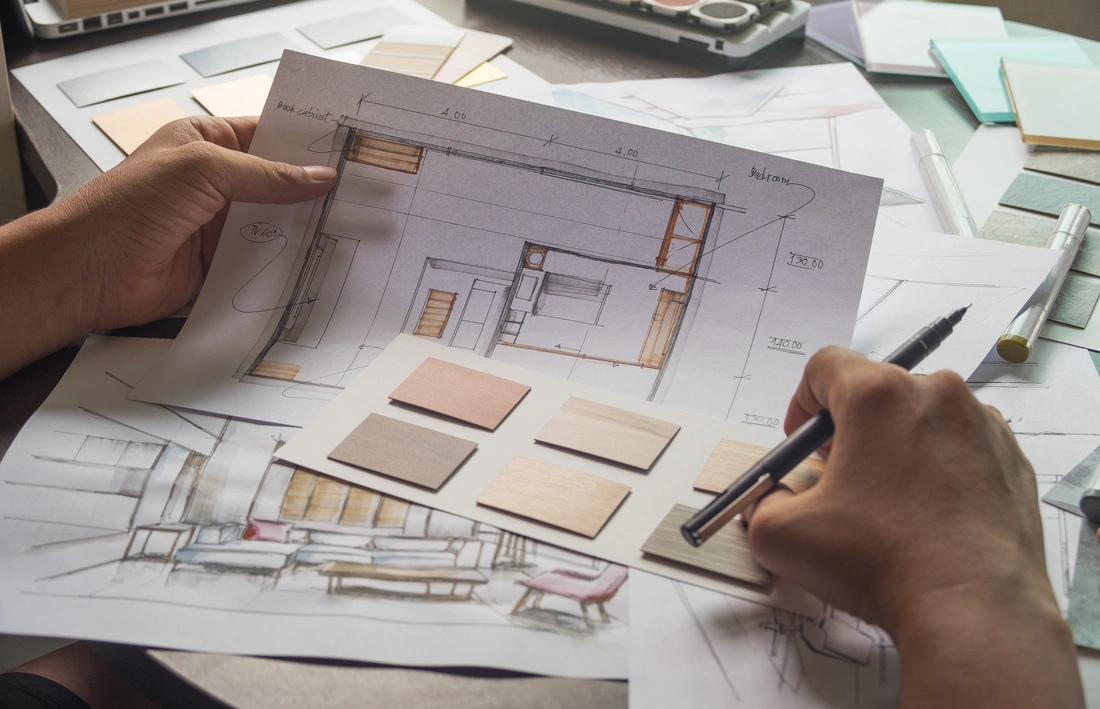
1. Define Your Project Before You Start Interviewing
Begin by identifying what you need help accomplishing, rather than trying to choose every finish in advance. Explain whether you are building a custom home, renovating an existing property, furnishing a completed residence, or updating selected rooms, because each requires a different combination of services. Prepare a short brief that you can share with every candidate. Include your property location, project stage, approximate scope, budget expectations, desired timing, and the professionals already involved. Your brief should address:
- Primary residence, second home, or seasonal use.
- Rooms and outdoor living areas included.
- Existing furniture, artwork, or collections to retain.
- Family routines, entertaining habits, and storage needs.
- Preferences for maintenance, durability, and comfort.
- Construction selections versus furnishings-only assistance.
- Expected involvement in purchasing and installation.
- Who will make decisions and approve spending.
Describe How You Live, Not Just How You Want the Rooms to Look
Reference images are helpful, but daily routines provide the information needed to make those rooms work. Explain how you cook, entertain, work from home, host overnight guests, and use indoor-outdoor spaces, along with anything that frustrates you about your current home. A designer should be able to translate those conversations into practical priorities. These might include better task lighting, more useful storage, quieter bedrooms, easier circulation, or furnishings that accommodate children and pets without creating an ongoing maintenance burden.
2. Look for Experience With Custom Homes and Construction
For a new custom home, ask about experience that extends beyond furnishing completed rooms. The designer should be able to explain how interior decisions become drawings, specifications, purchasing requirements, and information the construction team can use. Request examples of comparable work and clarify the designer’s exact role. A beautiful portfolio may include styling-only assignments, work performed at a previous firm, or projects where another professional produced the technical documentation. Relevant experience may include:
- Whole-home finish and fixture selections.
- Kitchen, bathroom, and custom cabinetry coordination.
- Interior elevations and detailed finish schedules.
- Decorative lighting and ceiling coordination.
- Collaboration with architects, builders, and specialty trades.
- Purchasing and installation of whole-home furnishings.
- Resolution of substitutions, delivery issues, and field questions.
Ask how the team handled one particularly difficult coordination issue. A clear explanation of the problem, decisions, and outcome is more informative than a general promise that every project runs smoothly.
3. Verify Credentials, Business Information, and Insurance
If a candidate represents themselves as a Nevada registered interior designer, verify that registration and identify the person responsible for your project. The state board can provide registration information and guidance on available disciplinary records, making it a useful independent check before you sign an agreement. Nevada design-professional consumer guide. Nevada’s published registration requirements include qualifying education, at least two years of interior-design experience, and the applicable examination requirements. Homeowners should focus on verifying the current credential rather than trying to evaluate a candidate’s eligibility themselves. Nevada interior-designer registration requirements.
Distinguish Membership, Certification, and Registration
Professional memberships can help you understand a designer’s involvement in the profession, but membership categories have different qualifications. For example, ASID distinguishes among several practitioner and other membership categories, so an association logo should not be treated as proof of a particular credential. ASID membership information. Ask the candidate to explain any credentials they use, then verify the ones relevant to your project. A solo practice can be highly qualified, and a large team can still be a poor fit; neither firm size nor membership alone establishes service quality.
Ask About Coverage Appropriate to the Services
Request the business’s legal name, applicable business-license information, and evidence of relevant insurance. Depending on the services, discuss professional liability, general liability, and responsibility for merchandise during receiving, storage, delivery, and installation. Clarify which coverage belongs to the designer and which belongs to independent service providers. The objective is to understand responsibility across the project rather than assuming one policy covers every activity.
4. Evaluate Design Compatibility and the Ability to Listen
Review several projects to understand the designer’s approach to proportion, materials, color, and detail. You do not need to love every room, but you should see evidence that the designer can interpret preferences similar to yours and explain the decisions behind the work. Bring a focused set of reference images with notes about what appeals to you. A photograph might communicate a warm material palette, restrained detailing, comfortable seating, or a particular quality of light rather than a request to reproduce the entire room. During the conversation, notice whether the designer:
- Asks questions before proposing solutions.
- Respects items and features you want to retain.
- Explains tradeoffs without dismissing your preferences.
- Can distinguish your priorities from temporary trends.
- Offers alternatives when an idea conflicts with budget or function.
- Makes you comfortable disagreeing or requesting clarification.
Use a Consultation to Evaluate the Working Relationship
A defined consultation can help you assess how the designer listens, organizes information, and explains recommendations. Before booking, confirm the fee, duration, preparation required, and whether you will receive written notes, a concept, or another specific deliverable. Treat the consultation as a professional service with an agreed purpose. It can clarify your project and the working relationship without requiring either party to commit immediately to a complete home-design engagement.
5. Ask What Local Experience Adds in Las Vegas and Henderson
Local experience is useful when it helps the designer anticipate site conditions, coordinate visits, obtain samples, understand delivery logistics, and work effectively with the project team. Ask for specific examples of those capabilities rather than assuming that a local office or a familiar neighborhood name guarantees them. Establish whether your property falls within Las Vegas, Henderson, unincorporated Clark County, or another jurisdiction. Henderson’s homeowner permitting guidance explains that permit requirements depend on the scope of the project, so interior work should be evaluated according to what is actually changing. Henderson homeowner permitting guide. For a managed community, ask which private requirements apply to your work. Exterior-visible changes, deliveries, site access, and work hours may require coordination, but the team should confirm the actual rules rather than assume every interior selection needs association approval.
Evaluate the Conditions of Your Specific Property
A guide for Southern Nevada should address local conditions without treating the entire state as one design environment. A Las Vegas residence with expansive glazing presents different considerations from a home elsewhere in Nevada, so ask how the designer evaluates exposure, use, and maintenance at your particular property. Discuss daylight, glare, privacy, material performance, indoor-outdoor transitions, and the practical demands of a second home. The answers should connect to your rooms and routines instead of relying on a generic “desert style.”

6. Bring the Interior Designer Into the Process Early
For a custom home, involve the interior designer while architectural layouts and construction details can still be coordinated efficiently. Furniture arrangements, cabinetry, lighting, window treatments, and appliance selections may affect decisions that become more difficult to revise after construction advances. For example, a furniture plan may reveal where floor outlets are useful, while a motorized-shade design may require power and a concealed pocket. These are interior decisions with construction implications, so ask how the designer identifies them before the related work is released.
| Selection or Design Decision | Why Early Coordination Matters |
|---|---|
| Appliances | Dimensions, ventilation, utilities, and cabinetry must work together. |
| Plumbing Fixtures | Rough-in requirements and compatible components need confirmation. |
| Decorative Lighting | Locations, support, switching, and ceiling relationships need coordination. |
| Cabinetry and Built-Ins | Dimensions, storage needs, equipment, and finishes must align. |
| Stone and Tile | Thickness, layout, edges, substrates, and transitions affect installation. |
| Window Treatments | Pockets, mounting space, power, and glass clearances may be needed. |
| Furniture Layouts | Circulation, outlets, lighting, and room proportions should be tested. |
| Artwork and Large Mirrors | Placement, lighting, backing, and installation access may matter. |
Not every decorative accessory needs to be selected before construction begins. The important requirement is a coordinated schedule that identifies which decisions must be complete before the work they affect.
7. Compare Services and Deliverables, Not Just the Phrase “Full Service”
“Full-service interior design” can describe very different engagements, from concept development and purchasing to extensive documentation and construction-phase support. Ask each candidate to explain exactly what is included, what is excluded, and who handles work outside their scope. Compare proposals against a common list so that a lower fee does not conceal missing services. Identify deliverables as well as activities: “assist with cabinetry” is less precise than an agreement describing the drawings, selections, reviews, and meetings to be provided.
| Service Area | What to Clarify |
|---|---|
| Programming and Concept | Interviews, reference boards, design direction, and budget assumptions. |
| Space Planning | Furniture layouts, circulation studies, and coordination with building plans. |
| Interior Documentation | Plans, elevations, details, schedules, and specifications included. |
| Finish and Fixture Selection | Products, samples, quantities, locations, and approval records. |
| Construction Coordination | Meetings, site visits, questions, and review responsibilities. |
| Purchasing | Who orders, pays, tracks, and manages vendor communications. |
| Receiving and Storage | Inspection, inventory, storage conditions, and associated costs. |
| Installation and Styling | Delivery coordination, placement, installation, and accessory selection. |
| Closeout | Outstanding items, damage claims, care information, and final accounting. |
Define Responsibility for Shared Design Elements
Lighting, cabinetry, appliances, fireplaces, and window treatments can involve several professionals. Ask who develops the design intent, who verifies technical requirements, who produces fabrication information, and who approves the final package. Separate specialists can work effectively together when responsibilities are clear. Problems become more likely when multiple parties assume someone else has checked dimensions, compatibility, quantities, or installation requirements.
8. Understand Interior Design Fees and Purchasing Compensation
Interior-design fees may be hourly, fixed, based on area, calculated as a percentage, or combined with purchasing compensation. Ask how the structure applies to your specific scope and what circumstances would change the amount you pay. A proposal should distinguish design services from merchandise, construction, and third-party expenses. Review the expected total engagement cost rather than comparing one hourly rate or headline fee.
| Fee Arrangement | Questions to Ask |
|---|---|
| Hourly | Which team members bill, at what rates, and how are estimated hours monitored? |
| Fixed fee | Which rooms, deliverables, meetings, and revisions are included? |
| Per-square-foot fee | Which areas count, and what services does the calculation cover? |
| Percentage-based fee | Which costs form the basis, and when is that basis updated? |
| Purchasing markup or fee | What amount is marked up, and what purchasing work is included? |
| Combination | How do the separate charges interact, and where might additional fees arise? |
Clarify Trade Discounts and Product Pricing
Access to trade suppliers can broaden your options, but it does not automatically mean the designer’s compensation comes entirely from discounts or that every item costs less than retail. Ask whether products are sold at an agreed price, billed at cost plus a markup, or purchased through another disclosed arrangement. Clarify whether discounts are retained, shared, or passed through, and whether procurement time is billed separately. Also ask about commissions, referral compensation, and purchasing restrictions that could affect recommendations.
Understand Deposits and Additional Services
Ask how the design retainer is applied and distinguish it from deposits for merchandise or custom work. Confirm payment milestones, refund and cancellation terms, and the treatment of unspent balances. Additional services might include extra revision rounds, added rooms, repeat sourcing after approvals, travel, or support beyond the assumed construction duration. Agree on a written authorization process before those situations arise.
9. Establish a Complete Interior Budget
A furniture budget, design-services budget, and construction-finish budget are different parts of the project. Establish how they fit together so that a selection does not appear affordable in one budget while its related installation or delivery costs remain unaccounted for. Request a budget organized by room or category, with enough detail to distinguish estimates from approved commitments. As the project develops, the designer and builder should be able to identify what is selected, what is ordered, what is paid, and what remains unresolved. Include relevant costs such as:
- Design services and consultant fees.
- Built-in finishes and fixtures.
- Furniture, rugs, artwork, and accessories.
- Window treatments and associated installation.
- Purchasing fees or product markups.
- Freight, receiving, inspection, and storage.
- Final delivery and installation.
- Applicable taxes.
- Contingency and approved changes.
Compare Installed Costs With Construction Allowances
A product price rarely tells the whole story for a built-in finish. Stone, for example, may involve fabrication, edge detailing, cutouts, supports, delivery, and installation, while a tile selection may affect preparation, layout, and labor. Ask how the designer checks selections against the builder’s allowance inclusions and exclusions. Before approving an upgrade, request the estimated overall difference and any associated schedule effects.
Prevent Duplicate Purchasing and Missed Scope
Some items could be purchased by the owner, designer, or builder depending on the agreement. Assign a purchasing party and installation responsibility to each shared category so decorative lights, hardware, mirrors, and similar items are neither ordered twice nor omitted. Also establish how credits and substitutions are recorded. A shared budget should reflect the latest approved decision rather than retain an outdated allowance alongside a separate purchase.
10. Ask How the Designer Coordinates With Your Builder and Architect
A custom home benefits when the design and construction team exchanges clear, current information. Ask how the designer participates in coordination meetings, responds to questions, and incorporates changes into the documents used by the builder and trades. Good collaboration includes the ability to discuss cost and constructability without losing sight of your priorities. Ask for an example of a design feature that was adjusted after pricing or technical review and how the team preserved the intended result. The process should address:
- A common source for current drawings and selections.
- Document dates, revision tracking, and approval status.
- Responsibility for responding to field questions.
- Review of relevant samples and shop drawings.
- Written authorization for substitutions.
- Communication of cost and schedule consequences.
- Escalation when the team cannot resolve a decision.
Clarify What a Site Visit Does and Does Not Include
Ask whether site visits are for design clarification, review of specified details, installation coordination, or another defined purpose. The contract should identify the expected frequency, documentation, and any limits to the service. Design coordination does not automatically include directing trades, supervising all construction, or controlling site safety. Establish responsibilities in the project agreements so homeowners and team members share the same expectations.

11. Review the Selection Schedule and Change Process
A designer should be able to explain when decisions are needed and why those dates matter. Ask for a schedule connected to pricing, ordering, fabrication, and installation rather than a sequence of presentations with no relationship to construction. For each major selection, identify time for owner review, technical coordination, samples, availability checks, and purchasing. A material that is available when first discussed may need its status reconfirmed when the order is placed.
Make Approval Mean Something Specific
An approved concept is different from an approved product specification or authorization to place an order. The records should distinguish these stages so that a favorable comment during a meeting does not become an unintended purchasing commitment. When a selection changes, ask the team to document revised cost, timing, cancellation exposure, and effects on related work. Then obtain the required authorization before the change moves into ordering or construction.
12. Examine the Procurement, Delivery, and Storage Process
Procurement includes more than placing an order, particularly when a whole home involves multiple suppliers and custom pieces. Ask who verifies specifications, reviews order acknowledgments, tracks production, coordinates shipping, and resolves discrepancies. The purchasing arrangement should also identify who contracts with each supplier and who handles a claim. Custom and made-to-order items may have restrictive cancellation or return terms, so those conditions should be clear before authorization. Ask how the designer manages:
- Final product dimensions, finishes, and quantities.
- Required deposits and balances.
- Order confirmations and estimated shipping dates.
- Backorders, substitutions, and discontinued items.
- Receiving inspections and damage documentation.
- Claim deadlines and replacement coordination.
- Storage charges and coverage for goods.
- Delivery access and installation sequencing.
Plan for the Actual Condition of the Home
Furniture installation should be coordinated with site readiness and remaining construction activities. Ask how the team determines when the home is suitable for delivery and how it protects installed work if other activities continue. If construction is delayed, understand the resulting storage, redelivery, or rescheduling costs. A planned contingency is more useful than assuming every supplier and installer can move their dates without consequence.
13. Evaluate Comfort, Material Performance, and Maintenance
A luxury interior should work well after the photography and installation are complete. Ask how the designer evaluates cleaning, wear, repairability, comfort, and the suitability of materials for the way your household uses each room. For a Las Vegas or Henderson home, discuss how sun exposure, privacy, dust at frequently used exterior doors, and poolside traffic influence selections. Consider the performance of the specific product and location rather than accepting a broad label such as “durable” or “performance material.” Useful topics include:
- Cleanability of upholstery and rugs.
- Maintenance expectations for stone and specialty finishes.
- Glare from polished surfaces.
- Suitability of flooring for wet or heavily used areas.
- Comfort and dimensions of seating.
- Storage and housekeeping access.
- Acoustic comfort in large, open rooms.
- Manufacturer installation and care requirements.
Coordinate Lighting, Glazing, and Window Treatments
Daylight depends on window placement, shading, and interior decisions working together. Ask how the designer considers changing light through the day, privacy needs, and the relationship between decorative lighting and the home’s overall lighting plan. U.S. Department of Energy daylighting guidance. Review important samples in representative lighting conditions whenever practical. A finish selected under showroom lighting may look different beside your flooring, glazing, and planned fixtures.
Plan for Future Needs
Discuss whether the home should accommodate changing mobility, visiting relatives, or different household arrangements over time. Furniture clearances, reachable storage, thoughtful lighting, and adaptable rooms can support those goals when addressed early. Ask the designer to explain the tradeoffs between a highly specialized feature and a more flexible solution. Long-term usefulness should be part of the design conversation alongside appearance.
14. Meet the Team and Confirm Communication Expectations
Find out who will lead your design meetings, prepare documentation, manage purchasing, and answer billing questions. A principal may direct the creative work while other team members handle its delivery, so meet the people you will rely on most often. Neither a solo practice nor a larger studio is automatically preferable. Evaluate relevant experience, workload, continuity arrangements, and access to support if a key person becomes unavailable. Agree on:
- Primary point of contact.
- Meeting frequency and availability.
- Expected response times.
- How urgent site questions are handled.
- Where approvals and meeting notes are stored.
- How budget and purchasing updates are reported.
- The amount of owner participation expected.
Establish a Practical Process for Remote Owners
If you are building or furnishing a second home, ask how the designer works with owners who are not regularly in Southern Nevada. Discuss video presentations, sample delivery, planned visits, remote approvals, and the responsibilities of any local representative. Digital images can help with decisions, but they do not replace every physical review. Agree on which materials, furnishings, and final selections require an in-person inspection or a sample before approval.
15. Check References and Review the Contract
Speak with previous clients whose projects involved comparable scope and services. Ask about the working relationship and problem resolution, not just whether they liked the finished rooms. Useful reference questions include:
- Were fees and purchasing terms explained clearly?
- Did the designer understand the agreed budget?
- Were construction selections delivered when needed?
- How well did the designer coordinate with the other professionals?
- Were approvals documented before orders were placed?
- How were mistakes, damaged goods, or delays resolved?
- Did the final accounting match your expectations?
- Would you hire the same designer again?
Put the Service and Purchasing Terms in Writing
Your agreement should define the work, compensation, responsibilities, and process for additional services. The Nevada board’s consumer guide recommends a written agreement and careful review of the obligations it creates. Nevada consumer contracting guidance. Review the handling of deposits, cancellation, unused funds, incomplete work, purchasing records, and outstanding orders if the relationship ends. Also clarify rights to use the design documents, access to project information, and any photography or publicity permissions.
Define Closeout Before the Project Begins
Ask what you will receive when the work is complete and how unresolved items will be tracked. Depending on the engagement, closeout may include a final inventory, care instructions, warranty information, purchasing reconciliation, and a list of repairs or replacements still pending. Distinguish manufacturer warranties, installation obligations, and the designer’s own services. Knowing who to contact after move-in makes the final handoff more useful.
Questions to Ask an Interior Designer Before Hiring
Use the same core questions with each shortlisted candidate so differences in scope and approach become easier to see. Follow up on unclear answers in writing before comparing proposals or committing to purchases.
- Which completed projects best demonstrate your fit for our home?
- What was your exact role on those projects?
- Which credentials apply to the services you are proposing?
- Who will lead our project, and when can that person begin?
- What do you need to understand about our lifestyle and priorities?
- Which drawings, schedules, and specifications will we receive?
- How will you coordinate with our architect and builder?
- How are design fees, purchasing fees, and product prices calculated?
- What costs are excluded from the proposal?
- How will selections be checked against construction allowances?
- Which decisions must be made before construction milestones?
- How do you document approvals and changes?
- Who handles ordering, receiving, storage, and damage claims?
- What support is included during construction and installation?
- What happens to documents, funds, and orders if the engagement ends?
- May we speak with clients from comparable projects?
Red Flags When Choosing an Interior Designer
A concern should prompt a specific question and an opportunity for clarification. Persistent uncertainty about money, responsibility, credentials, or deliverables deserves attention even when you strongly prefer the designer’s aesthetic. Watch for:
- Credentials that cannot be verified.
- Unclear authorship or scope in portfolio examples.
- Reluctance to discuss the total budget.
- Undisclosed purchasing compensation or restrictions.
- Pressure to order before dimensions and approvals are confirmed.
- No defined schedule for construction-related selections.
- Unclear responsibility for drawings and technical coordination.
- Repeated changes communicated only through informal messages.
- No process for damaged goods, returns, or missing items.
- Unrealistic promises about savings or completion dates.
- Poor responsiveness during the hiring process.
- A contract that leaves major services undefined.
A home office, small team, paid consultation, or use of outside specialists is not inherently a warning sign. What matters is whether the professional can explain and support a workable arrangement for your project.
Compare Interior Designers Side by Side
Create a comparison using the same scope, budget assumptions, and desired services for each candidate. Record evidence from interviews and proposals, then mark unresolved questions rather than filling gaps with assumptions.
| Evaluation Area | Evidence to Request |
|---|---|
| Relevant Experience | Comparable completed projects and explanation of responsibilities. |
| Design Fit | Discussion of your priorities and examples of adaptable work. |
| Credentials | Verification of applicable registration and qualifications. |
| Staffing | Named project lead, team roles, and availability. |
| Scope | Written deliverables, exclusions, and revision allowances. |
| Construction Coordination | Sample documentation and meeting or response process. |
| Budget Management | Category budget and allowance-review approach. |
| Fee Transparency | Design compensation, purchasing terms, and additional charges. |
| Scheduling | Selection deadlines tied to construction and procurement. |
| Purchasing | Order tracking, receiving, storage, and claims procedures. |
| Communication | Reporting frequency and approval records. |
| Closeout | Final accounting, documentation, and unresolved-item process. |
A compelling portfolio should be supported by credible delivery arrangements. Choose the professional whose creative approach, responsibilities, and financial terms you understand well enough to make an informed commitment.
FAQs
Frequently Asked Questions About Hiring an Interior Designer in Las Vegas and Henderson
How do I find an interior designer for a custom home?
Start with referrals, relevant completed projects, and professional directories, then narrow the list according to your scope and budget. For new construction, prioritize evidence of construction coordination and documentation alongside design style.
How many interior designers should I interview?
Three well-matched candidates is a practical starting point because it gives you useful comparisons without making the process unmanageable. Expand the search if the proposals reveal a mismatch in services, availability, or budget expectations.
Does an interior designer need a Nevada license?
Nevada regulates registered interior-design practice and provides exemptions for certain activities. Verify the proposed services and applicable credential with the state board rather than assuming every decorating engagement requires registration. Nevada law.
Is a residential designer the same as an interior designer?
No, Nevada recognizes residential design and registered interior design as separate professional categories. Ask which credential the professional holds and how their services relate to the work your home requires. Nevada professional definitions.
How much does an interior designer cost in Las Vegas or Henderson?
Fees depend on scope, complexity, documentation, purchasing responsibilities, and the level of construction and installation support. Request a project-specific proposal that separates professional services from merchandise and third-party expenses instead of relying on an unsupported local average.
Is the first interior design consultation free?
Some professionals offer an introductory call, while others charge for consultations that include substantive advice or site review. Ask what the appointment includes, what it costs, and whether any written deliverables are provided.
When should I hire an interior designer for a new custom home?
Begin the search during architectural planning, while the team can still coordinate layouts and built-in features efficiently. The most useful timing is before construction-related selections become urgent or require changes to completed work.
Can I hire a designer outside Nevada?
An out-of-state location does not automatically make a designer unsuitable, but any required Nevada authorization still needs to be addressed. Also establish how site visits, measurements, samples, deliveries, and construction questions will be handled locally.
Can my architect or builder handle the interior selections?
Some offer interior-selection services, but the extent varies by agreement and project. Compare the included deliverables with your needs and identify whether a separate interior designer would fill meaningful gaps.
Can I purchase furniture myself while working with a designer?
Some designers offer that arrangement, while others structure their services around managing purchases. Agree in advance on sourcing fees, product substitutions, measurement checks, returns, and support for owner-purchased items.
Do designers have to pass along trade discounts?
Do not assume a particular discount arrangement without reviewing the purchasing terms. Ask how products are priced, which fees apply, and whether discounts are retained, shared, or passed through under the agreement.
Are 3D renderings necessary?
Renderings can help you understand scale, layout, and relationships among materials, especially if you find drawings difficult to interpret. Ask what decisions they will support and remember that construction still requires the appropriate specifications and documentation.
How long does a whole-home interior design project take?
Timing depends on scope, owner decisions, construction progress, custom fabrication, and delivery schedules. Ask for a project-specific sequence that distinguishes design completion from purchasing, installation, and resolution of remaining items.
Will hiring an interior designer prevent change orders?
Good coordination can reduce avoidable changes, but no professional can eliminate every revision, site condition, or owner-requested adjustment. Look for a process that identifies consequences before changes are authorized and keeps the team working from current information.
Is it worth hiring a designer for a smaller project?
A focused consultation or limited engagement can be useful when you need help with a specific decision or group of rooms. Confirm that the professional accepts that scope and that the deliverables provide enough information for you to proceed.
Choose a Designer Who Can Connect Your Vision With the Building Process
The right interior designer should help you make informed choices about how your home looks, functions, and is completed. Evaluate creative compatibility together with documentation, budget discipline, communication, and the ability to coordinate with the professionals responsible for building your home. Before hiring, make sure you understand who will do the work, what you will receive, how purchases are handled, and which decisions are needed next. A clear agreement and a coordinated team provide a stronger foundation for a satisfying result.
Planning a Custom Home in Las Vegas or Henderson?
Interior design is most useful when it is coordinated with architectural planning, construction budgeting, and the schedule for building your home. Explore the custom home building process to understand how those decisions fit together and what to ask as you assemble your team.