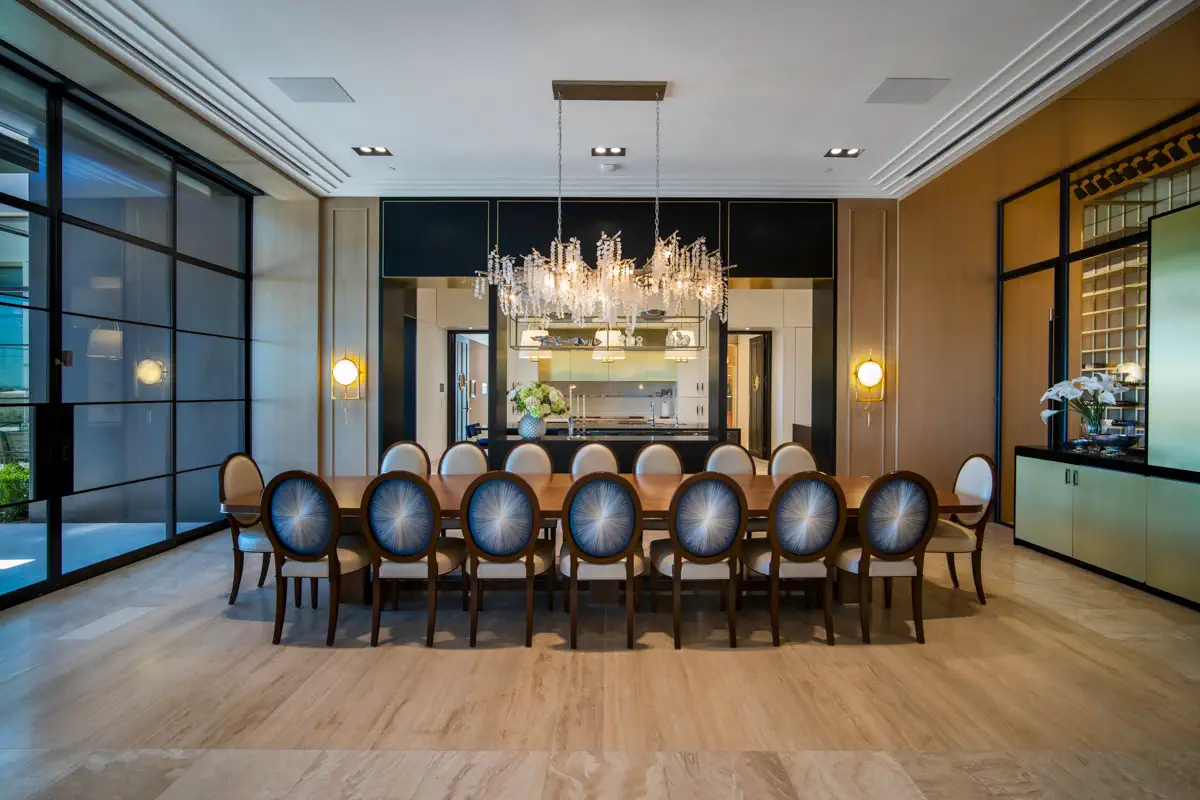
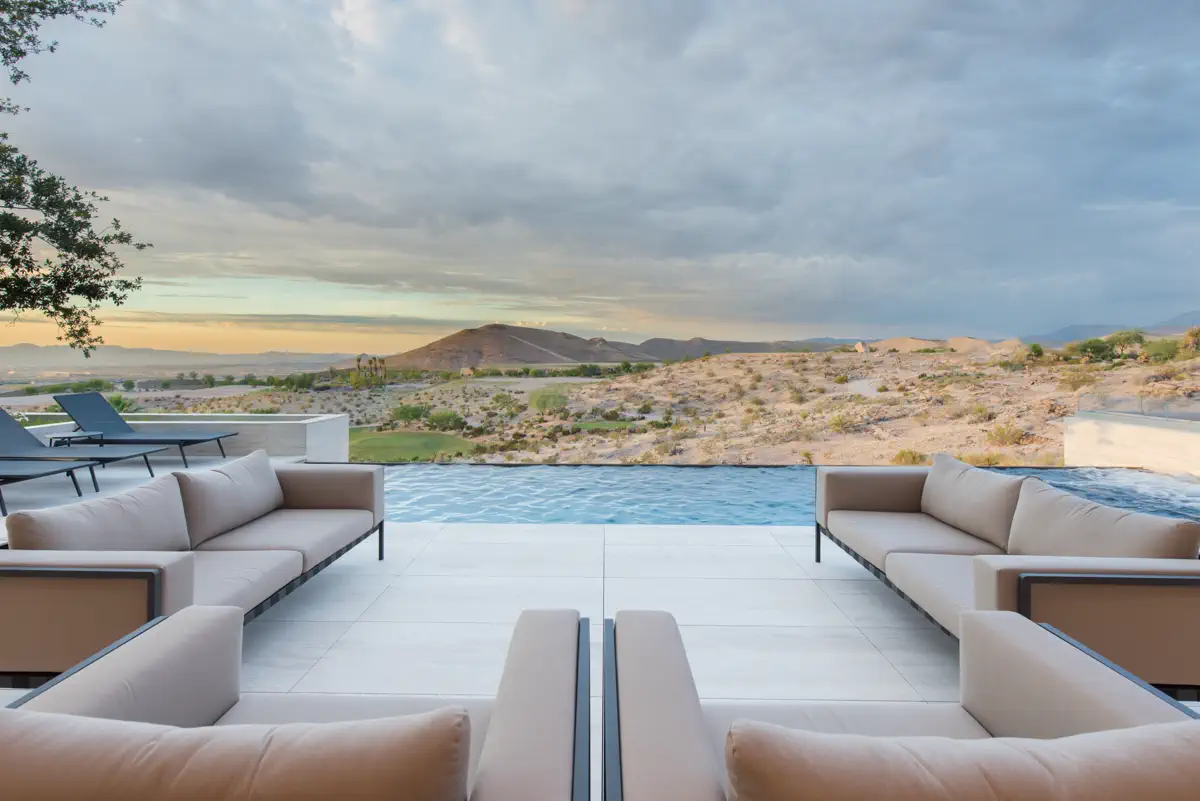
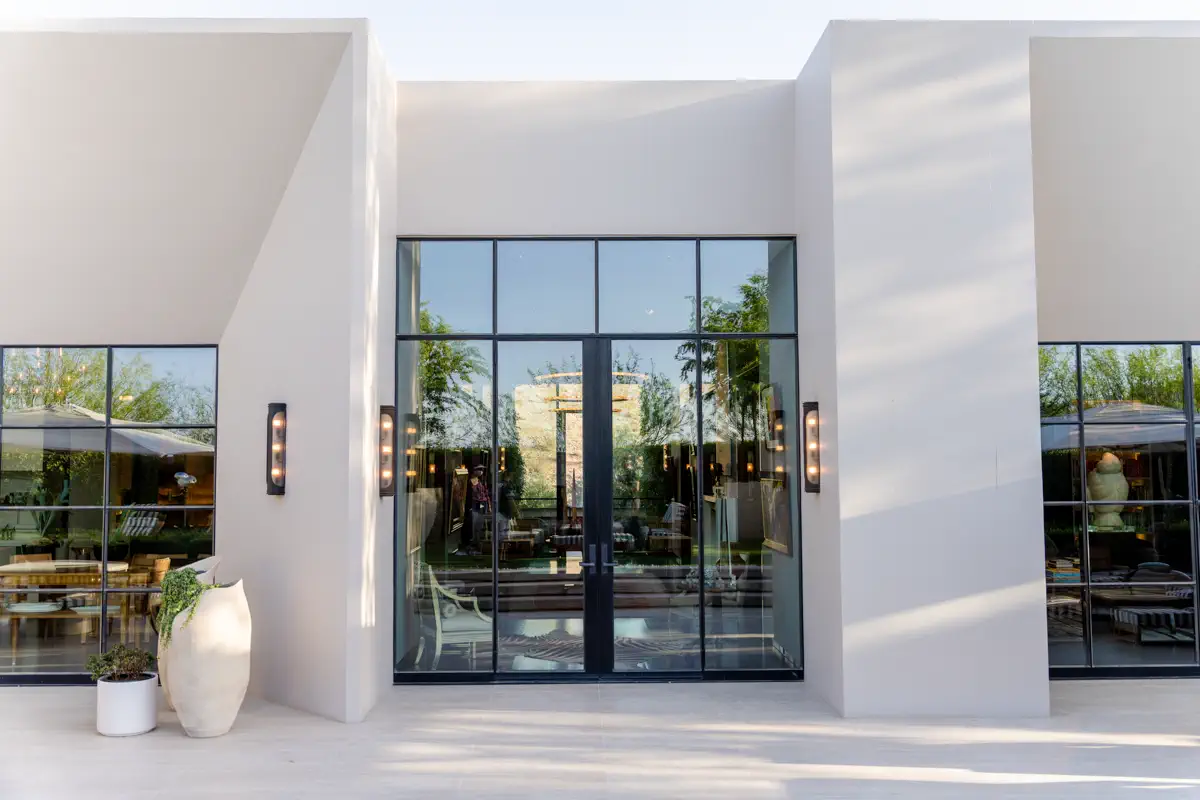
Luxury custom home built by Forte Specialty Contractors in Las Vegas

How to Choose a Luxury Custom Home Builder in Las Vegas

A practical guide to vetting the team, process, budget, schedule, and experience behind a luxury custom home.

Luxury custom homes

Choosing the right builder starts with the process.

Choosing a luxury custom home builder in Las Vegas should begin with five areas: relevant project experience, preconstruction capabilities, financial and schedule transparency, superintendent and project-team capacity, and experience navigating the community where you intend to build. For complex custom residences, buyers should also evaluate the builder's ability to coordinate with architects and designers, manage long-lead procurement, control specialty trades, document construction, and provide references from projects of comparable scale.

The finished homes in a builder's portfolio matter, but they only show the result. Choosing the right builder requires understanding the process used to get there.

For a luxury custom estate, you are selecting the team that may manage hundreds of tradespeople, vendors, design decisions, submittals, purchases, inspections, and financial transactions over the course of a multi-year relationship. The way that team estimates, plans, communicates, documents, and manages construction can be just as important as the craftsmanship visible in the finished home.

Builder vetting

How Do You Vet a Luxury Custom Home Builder?

To properly vet a custom home builder, look beyond photographs and sales presentations. Verify the builder's credentials, inspect comparable work, meet the people who will actually manage your project, understand how the budget and schedule are developed, examine the change-order and procurement processes, and speak directly with previous clients.

For a luxury custom home, these are the areas worth investigating:

  1. Licensing, insurance, and financial controls
  2. Experience with comparable custom estates
  3. Superintendent and project-team capacity
  4. Preconstruction capabilities
  5. Estimating and budget development
  6. Allowances and cost transparency
  7. Change-order procedures
  8. Self-performed and subcontracted work
  9. Long-lead procurement
  10. Construction scheduling
  11. Remote project visibility
  12. Client references
  13. Independent verification of recognition
  14. Warranty and closeout
  15. The builder's experience with your architect, site, and community

Each deserves a closer look.

Luxury custom home construction by Forte Specialty Contractors in Las Vegas
Choosing the right builder requires understanding the process used to get there.

Due diligence

1. Verify the Builder's Licensing, Insurance, and Business Credentials

In Nevada, verify the contractor directly through the Nevada State Contractors Board rather than relying solely on a license number shown on a website, proposal, vehicle, or advertisement. You can look up and verify a contractor's license here.

Confirm:

  • The license is active.
  • The license classification is appropriate for the work being performed.
  • The business name matches the company you are contracting with.
  • Required licensing and bonding information is current.
  • The builder carries appropriate insurance for a project of your scale.

Ask the builder to provide a current certificate of insurance and explain the coverage carried for general liability, workers' compensation, and other applicable policies. For a major custom estate, financial administration also deserves attention. Ask how progress billing is handled, how subcontractor invoices are documented, how lien releases are administered, and what controls exist around owner funds.

Questions to ask:

  • What Nevada contractor licenses do you hold?
  • Can you provide current insurance certificates?
  • How are subcontractor payments and lien releases tracked?
  • How are progress billings documented?
  • Can bonding be provided if the project requires it?

Licensing establishes that a builder is legally qualified to operate.

2. Ask to See Completed Projects Comparable to Yours

A builder may have an impressive portfolio without having experience with the type of home you intend to build. When reviewing luxury custom home builders, look for projects comparable in:

  • Size
  • Architectural complexity
  • Structural complexity
  • Finish level
  • Site conditions
  • Specialty systems
  • Custom fabrication
  • Landscape and exterior scope
  • Overall construction quality

A builder experienced primarily with smaller homes or production-style construction may operate very differently from a builder accustomed to large custom estates. Whenever possible, ask to see both active construction and completed homes. An active project reveals organization, field supervision, trade coordination, protection of finished work, cleanliness, sequencing, and the general standard of the construction operation. A completed home shows craftsmanship. An older completed home can show how that craftsmanship performs over time.

Ask:

Can you show me completed homes that are comparable to what I am planning to build?

3. Find Out Who Will Actually Manage Your Home

The person presenting the company may not be the person managing your construction. Before selecting a custom home builder, understand who will be responsible for your project after the contract is signed. A sophisticated custom home team may include:

  • Project executive
  • Project manager
  • Superintendent
  • Project engineer
  • Estimating and preconstruction personnel
  • Procurement support
  • Project accounting
  • Specialty construction personnel

Ask to meet key members of the team before construction begins. You should understand who makes field decisions, who communicates with the architect, who controls the schedule, who manages the budget, and who is responsible for resolving issues.

Questions to ask:

  • Who will be my primary point of contact?
  • Who will manage construction in the field?
  • Who manages the financial side of the project?
  • Who coordinates with my architect and interior designer?
  • Which members of the team will remain involved from preconstruction through completion?

On a complex estate, the depth of the organization behind the superintendent can be as important as the superintendent personally.

4. Ask How Many Projects Your Superintendent Will Be Managing

This is one of the most useful questions you can ask a luxury home builder. A superintendent responsible for several projects cannot physically be in several places at once. Ask directly:

How many other projects will my superintendent be responsible for while my home is under construction?

Be cautious of general answers about having an experienced team and ask for clarity. Ask how the superintendent's time is actually allocated. Large custom homes involve constant coordination among trades, inspectors, designers, vendors, consultants, and project management. Field conditions change quickly, and many important quality-control decisions occur before finished work covers what is underneath. For a complex custom estate, determine whether the level of on-site supervision is appropriate for the size and complexity of the project.


Budget and planning

5. Understand What Happens During Preconstruction

One of the biggest differences between luxury custom home builders can be found before construction starts. Strong preconstruction is not simply producing a preliminary price. It is the process of converting architectural intent into a buildable, coordinated plan. Preconstruction may include:

  • Drawing review
  • Constructability analysis
  • Site evaluation
  • Budget development
  • Trade input
  • Material research
  • Structural coordination
  • Value engineering
  • Long-lead analysis
  • Preliminary scheduling
  • Community and architectural review coordination
  • Logistics and site-access planning
  • Identification of potential budget and schedule risks

The earlier this work occurs, the more opportunities the owner, architect, and builder have to solve problems while they are still relatively inexpensive to change. This is why involving a builder before construction documents are completely finished can be valuable. Many owners select an architect specifically for that architect's design philosophy and creative vision. What matters is whether the architect and builder can collaborate effectively while the design develops. A capable builder should help the design team understand constructability, cost, availability, sequencing, and schedule without diluting the architectural vision.

6. Ask How the Initial Construction Budget Is Created

A preliminary number is only as useful as the information behind it. Ask the builder to explain exactly how the estimate was developed. For a complex custom home, estimating may combine:

  • Detailed quantity takeoffs
  • Current subcontractor pricing
  • Vendor quotations
  • Current material costs
  • Historical project data
  • Labor assumptions
  • Site-specific conditions
  • General conditions
  • Allowances
  • Specialty scopes
  • Contingency
  • Escalation or market-risk assumptions where appropriate

The budget should also evolve with the design. As architectural drawings become more detailed and major design decisions are made, the builder should be able to update the estimate so the owner and architect can see whether the design remains aligned with the intended construction budget.

Ask:

  • What information is this estimate based on?
  • Which costs are actual trade or vendor quotes?
  • Which costs are historical assumptions?
  • When will the estimate be updated?
  • How are design changes reflected in the budget?
  • How is value engineering handled?

Be cautious about choosing a builder because one preliminary number is lower than the others. The lowest early estimate and the lowest final construction cost are not the same thing.

7. Understand the Allowances

Allowances are common in custom home construction because every selection may not be finalized when budgeting begins. An allowance should clearly identify what it is intended to cover and should be based on a realistic expectation for the project's level of finish. For example, a budget can appear artificially low if allowances for stone, plumbing fixtures, lighting, appliances, flooring, or other major selections are substantially below what the owner is actually likely to choose.

Ask:

  • Which portions of the budget are allowances?
  • How was each allowance established?
  • Does the allowance reflect the quality level represented in the design?
  • How are actual costs compared with allowances?
  • How are overages and savings handled?
  • Will I see supporting documentation for actual costs?

Your estimate will likely contain allowances. Make sure they are transparent, realistic, and clearly tracked.

8. Understand the Change-Order Process Before You Need It

Changes occur on complex custom homes. Before signing a construction agreement, understand how the builder handles owner changes, design revisions, unforeseen conditions, and field modifications. A clear process should establish:

  1. What is changing.
  2. Why the change is required.
  3. What the change will cost.
  4. Whether it affects the construction schedule.
  5. What documentation supports the price.
  6. Who must approve it.
  7. When the work may proceed.

Ask whether change orders are documented and approved before work takes place whenever circumstances allow. For cost-plus construction, ask what supporting cost information accompanies the change. Good change management protects both the owner and builder by creating a documented record of decisions throughout construction.

Luxury custom home planning and construction by Forte Specialty Contractors
A sophisticated construction schedule explains how the project gets from one milestone to the next.

Execution

9. Ask What Work the Builder Self-Performs

Some luxury builders subcontract every construction scope. Others maintain in-house capabilities for selected trades or specialty work. If a builder self-performs, ask what the builder controls directly, why those scopes are performed internally, and how quality is controlled across both in-house and subcontracted work. Ask:

  • Which scopes are self-performed?
  • Which scopes are subcontracted?
  • How are subcontractors selected?
  • How long has the builder worked with its primary trade partners?
  • How are specialty trades prequalified?
  • How is workmanship inspected before subsequent work covers it?

For complex residences, also ask how subcontractors are evaluated for manpower, insurance, safety, relevant experience, quality, financial capacity, and ability to execute the required schedule. A luxury home is ultimately constructed by a large network of people. The builder's ability to assemble, coordinate, and hold that network accountable matters.

10. Ask How Long-Lead Materials Are Managed

Procurement can affect the construction schedule months before an item is physically needed on site. Luxury custom homes frequently incorporate products that require significant engineering, shop drawings, fabrication, approvals, manufacturing, shipping, or installation coordination. Examples may include:

  • Custom glazing
  • Exterior doors
  • Specialty stone
  • Plumbing fixtures
  • Decorative lighting
  • Appliances
  • Elevators
  • Millwork
  • Architectural metals
  • Specialty finishes
  • Mechanical equipment
  • Home automation and AV systems
  • Custom-fabricated elements

Ask how the builder identifies long-lead materials during preconstruction and how required decision dates are incorporated into the project schedule.

11. Understand How the Construction Schedule Is Built

Ask for more than a projected completion date. A sophisticated construction schedule should explain how the project gets from one major milestone to the next. Depending on the project, builders may use tools such as:

  • Critical path scheduling
  • Look-ahead schedules
  • Procurement milestones
  • Design and submittal deadlines
  • Inspection milestones
  • Owner-selection deadlines
  • Trade sequencing
  • Weekly construction coordination

Ask how frequently schedules are updated and how emerging delays are identified. A useful schedule is an active management tool.

Questions to ask:

  • How is the master schedule developed?
  • What determines the critical path?
  • How often is the schedule updated?
  • How are upcoming activities communicated to trades?
  • How are owner decisions incorporated?
  • How are schedule impacts from changes documented?

12. Ask How You Will Monitor Construction if You Are Not in Las Vegas

Many owners building luxury custom homes in Las Vegas do not live in Nevada full time. That should not mean losing visibility into the project. Ask prospective builders exactly what information you will be able to access remotely. A strong remote communication system may include:

  • Regular owner meetings
  • Written project updates
  • Jobsite photographs
  • 360-degree construction documentation
  • Budget reporting
  • Schedule updates
  • Change-order tracking
  • Submittal and decision tracking
  • Current drawings
  • Daily construction records
  • Cloud-based project management access

Ask to see the system rather than simply hearing that communication is "excellent." The goal should be to give the owner enough information to understand the project's condition without needing to physically visit the site every week.

References and risk checks

13. Speak Directly With Previous Clients

Online reviews can be useful, but they are not a substitute for speaking with someone who has completed a comparable project. Ask for references from homes similar in scale, complexity, and finish level to your own. Useful questions to ask include:

  • How transparent was the builder financially?
  • Were problems communicated quickly?
  • How were change orders handled?
  • Did you feel informed throughout construction?
  • How involved was the superintendent?
  • How well did the builder work with the architect and interior designer?
  • How was the home delivered?
  • How responsive was the builder after move-in?
  • Would you hire the builder again?

14. Independently Verify Awards, Press, and Recognition

Awards, publications, professional memberships, and third-party recognition can help establish credibility and should also be verifiable. If a builder says a home appeared in a national publication, look for the original article. If the builder claims an award, check the organization that issued it. If the builder promotes membership in a professional directory or organization, verify the listing. Third-party recognition should reinforce a builder's project experience, but it will not replace your own due diligence. The same principle applies to portfolios. Whenever practical, determine whether the builder actually constructed the homes being presented and what role the company played.

15. Understand Warranty, Closeout, and What Happens After Move-In

The relationship should not end when the keys are handed over. Ask how the builder manages final completion and the transition from construction into ownership. A thorough closeout process may include:

  • Final quality-control inspections
  • Punch-list completion
  • Owner orientation
  • Equipment and system information
  • Warranty documentation
  • Product manuals
  • Applicable as-built information
  • Final project records
  • Follow-up after occupancy
  • A clearly explained warranty process

Ask who you contact when something needs attention after move-in and how warranty items are documented and resolved. For a highly customized estate, continuity can be particularly valuable because the construction team understands systems, assemblies, concealed conditions, finishes, and specialty features that a new service provider would need to learn from scratch.

Red Flags When Choosing a Custom Home Builder

No single issue automatically disqualifies a builder, but certain patterns deserve additional scrutiny. Be cautious when a builder:

  • Provides a dramatically low budget without being able to explain how it was developed.
  • Relies heavily on large or vague allowances.
  • Cannot show completed work comparable to your project.
  • Is reluctant to provide relevant client references.
  • Cannot clearly explain how many projects your superintendent will manage.
  • Has difficulty explaining how the construction schedule is developed and updated.
  • Performs changes without a clear written approval and pricing process.
  • Offers cost-plus construction but provides little visibility into actual project costs.
  • Cannot clearly explain how subcontractors and specialty trades are vetted.
  • Makes awards, media, licensing, or experience claims that cannot be independently verified.
  • Gives vague answers about how problems, budget changes, or schedule delays are communicated.
  • Pressures you to make a construction commitment before you understand the scope, budget, and contractual structure.

Questions to Ask a Luxury Custom Home Builder Before Hiring Them

When interviewing builders, consider asking these questions directly:

  1. Can you show me completed homes comparable to the one I am planning?
  2. Can I tour an active project?
  3. Can I tour a completed project?
  4. How many projects will my superintendent manage while building mine?
  5. How often will the superintendent be physically on site?
  6. What happens during your preconstruction process?
  7. How is my initial construction budget developed?
  8. How frequently is the estimate updated as design progresses?
  9. Which numbers in the budget are allowances?
  10. How are actual costs documented?
  11. How are change orders priced and approved?
  12. What work do you perform in-house?
  13. How do you select and prequalify subcontractors?
  14. How are long-lead materials identified and purchased?
  15. How is the master construction schedule created?
  16. How frequently is the schedule updated?
  17. How will I monitor the project when I am traveling or living elsewhere?
  18. Can you provide references from comparable clients?
  19. What happens during turnover?
  20. What warranty do you provide?
  21. How are warranty issues handled after move-in?
  22. How do you coordinate with my architect and interior designer?
  23. What experience do you have building in my specific community?
  24. What information will I receive with each progress billing?
  25. How are subcontractor invoices and lien releases administered?

FAQs

Frequently Asked Questions About Choosing a Custom Home Builder

What is the best way to vet Las Vegas luxury home builders?

The best way to vet a Las Vegas luxury home builder is to verify licensing and insurance, inspect comparable completed and active projects, understand who will manage the project, review the builder's estimating and scheduling processes, examine cost and change-order transparency, and speak directly with previous clients who completed similar homes.

How do I choose a custom luxury home builder in Las Vegas?

Choose a builder with demonstrated experience constructing homes similar to yours and a process capable of managing the complexity of the project. Evaluate preconstruction, estimating, superintendent capacity, trade relationships, procurement, scheduling, communication, financial transparency, warranty support, and experience with your architect and community.

When should I involve a custom home builder?

Ideally, involve the builder while architectural design is still progressing. Early builder involvement allows estimating, constructability, scheduling, procurement, site logistics, and value-engineering information to influence decisions before the drawings are complete.

Should I choose my architect or builder first?

Either can come first. Many luxury homeowners select an architect first because they are drawn to that architect's distinct design vision. The important step is bringing the builder into the process early enough for the architect and construction team to collaborate on budget, constructability, materials, schedule, and execution.

Is design-build better for a custom home?

Design-build can be an effective delivery method because design and construction are closely integrated, but it is not the only successful approach. Many exceptional custom homes are created by an independent architect working closely with an experienced builder. The quality of collaboration matters more than whether both services appear under one company name.

Is a cost-plus contract good for a luxury custom home?

Cost-plus construction can work particularly well for highly customized projects when there is strong financial transparency. Owners should understand the builder's fee structure and receive appropriate documentation showing actual project costs. Other contract structures can also work well, so the appropriate approach depends on design completion, project complexity, risk allocation, and owner preferences.

How many projects should a custom-home superintendent manage?

There is no universal number that applies to every project. The more useful question is how much dedicated supervision your particular home will receive. Large, complex custom estates require substantial field coordination, so owners should understand exactly how the superintendent's time will be divided before hiring the builder.

Forte standards

How Forte Measures Against These Standards

The criteria above are the same standards we believe owners should use when evaluating Forte Specialty Contractors or any other luxury custom home builder. Forte builds luxury custom home residences throughout the Las Vegas Valley and has structured its custom-home operation around the level of oversight these projects require.

Dedicated On-Site Supervision

Every Forte custom home receives a superintendent dedicated full time to that project. The superintendent is not shared between multiple custom-home sites. Particularly large or complex estates may require two dedicated superintendents. That field leadership is supported by a larger team that includes project management, project engineering, estimating and preconstruction, executive oversight, project controls, accounting, procurement, and specialty construction resources.

Detailed Preconstruction and Estimating

Forte prefers to become involved while design is developing. Our estimating and preconstruction team uses detailed quantity takeoffs, historical project costing, current trade and vendor pricing, material pricing, competitive subcontractor input, constructability analysis, value engineering, and site-specific information to develop the budget. Estimates are updated as major drawing milestones and significant value-engineering decisions occur. Long-lead procurement requirements are also evaluated during preconstruction so important design and purchasing decisions can be made before they threaten the construction schedule.

Collaboration With Your Architect

Forte offers design-build capabilities, but many of our custom-home clients come to us with an architect already selected. We respect why. Great residential architecture often begins with an owner choosing an architect because of that architect's individual vision, style, and body of work. Our role is to become the construction partner capable of bringing that vision to life. Forte works alongside architects, interior designers, engineers, consultants, and owners throughout design and construction, providing budget, constructability, material, procurement, and schedule information while protecting the design intent.

Transparent Cost-Plus Construction

Forte generally prefers cost-plus agreements for highly customized residential projects because they provide a transparent framework for managing evolving custom work. Allowances are clearly identified in the budget. Clients receive visibility into actual project costs, and backup documentation is provided to support cost-plus billing. Changes are documented, priced, reviewed for potential schedule impact, and submitted for owner approval before work proceeds whenever circumstances allow.

In-House Construction Capabilities

Forte's capabilities extend beyond traditional general contracting. Through Forte and its specialty construction resources, builder services and capabilities include:

  • Cold-formed steel framing
  • Drywall
  • Level 5 finishes
  • Plaster and specialty finishes
  • GFRC and GFRG
  • Architectural metals
  • Custom fabrication
  • Theming and specialty architectural elements

Self-performing selected scopes gives the project team additional control over quality, coordination, sequencing, and specialty execution while Forte continues to manage and prequalify the outside trade partners required for the complete home.

Critical Path Scheduling and Look-Ahead Planning

Forte frequently uses critical path scheduling together with shorter-term look-ahead schedules to manage construction. Procurement, field sequencing, owner decisions, design information, and trade coordination are integrated into the planning process so the project team can identify what needs to happen next and what could affect upcoming work.

Project Visibility From Anywhere in the World

Forte uses Procore to centralize drawings, RFIs, submittals, financial information, project documentation, and communication. Clients also receive regular updates, photography, 360-degree construction documentation, budget reporting, schedule information, decision tracking, and remote meetings as needed. The goal is near-real-time visibility into the project whether the client is in Las Vegas or anywhere else in the world.

References and Project Tours

References are available upon request for serious prospective clients. Pending homeowner approval and project availability, Forte can also arrange tours of active and completed custom homes for qualified prospective clients. We value completed-home tours in particular because a luxury home should not only look exceptional on completion day. The quality of the construction should stand the test of time.

One-Year Builder Warranty and Custom Home Turnover

Forte provides a one-year builder warranty along with a structured custom-home turnover process, final punch work, owner orientation, and follow-up after completion. Before turnover, Forte Custom Home Maintenance is introduced to the residence and its systems. Because the maintenance team can become familiar with the home's construction and inner workings before the owner takes possession, ongoing care can transition seamlessly after construction for clients who choose that service.

Forte Specialty Contractors custom home builder standard in Las Vegas
The right builder can explain the work before the work begins.

Choosing a builder

Choosing the Right Builder Starts With Asking Better Questions

The best luxury custom home builders should be comfortable being thoroughly vetted. Ask about the people. How the budget was created. How the schedule works. Ask to see projects comparable to yours. Ask previous clients about their experience. Ask for enough transparency to independently confirm the claims that matter. A custom estate requires an extraordinary amount of trust between an owner and builder. That trust should be earned through demonstrated experience, clear systems, transparency, and verifiable results.

Planning a Luxury Custom Home in Las Vegas?

If you are considering a custom home build in Las Vegas, Henderson, Summerlin, or one of Southern Nevada's private residential communities, speak with Forte early in the process. Whether you already have an architect and developed plans or are beginning with a homesite and an idea, our team can help you evaluate the construction path ahead.

Schedule a Consultation